Place stock where it can sell fastest, replenish before gaps
appear, and keep every store, channel, and location
aligned to live demand.
A six-week proof of concept on your own data
ALLOCATION & REPLENISHMENT
Place stock where it can sell fastest, replenish before gaps
appear, and keep every store, channel, and location
aligned to live demand.
A six-week proof of concept on your own data
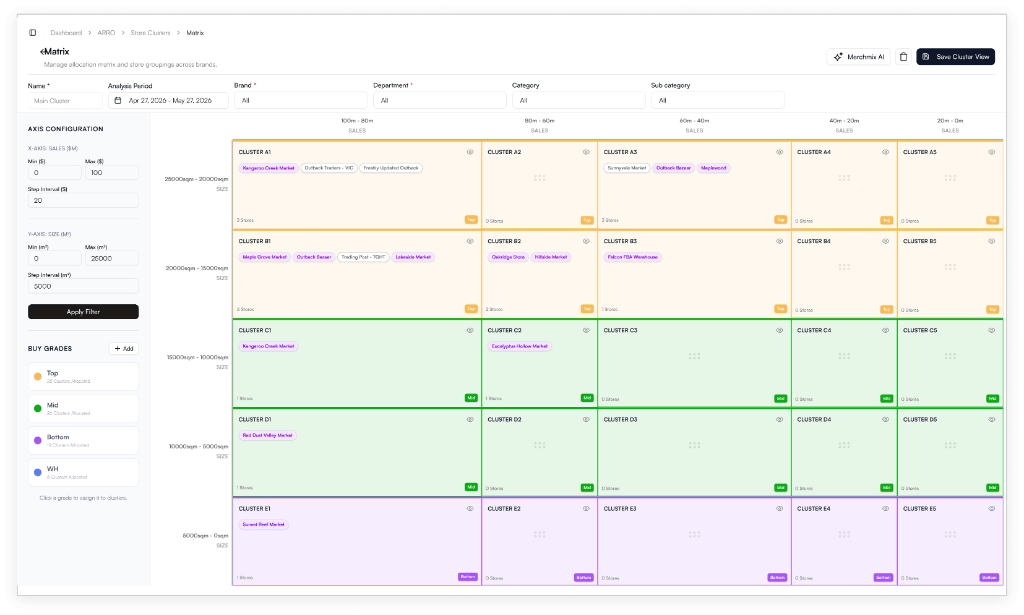
Every store is classified by size, footfall, revenue band, size range and climate, so allocation quantities follow store capability rather than being tuned store by store. The same logic works across ten stores or a thousand.
Replenishment fires on live sales, availability and stock movement, so lines are topped up before the gap opens.
Spot a line running hot in one store and move stock to it while the demand is still there.
Stockout risk, low stock thresholds and restock opportunities surface as alerts, not as a report on Monday.
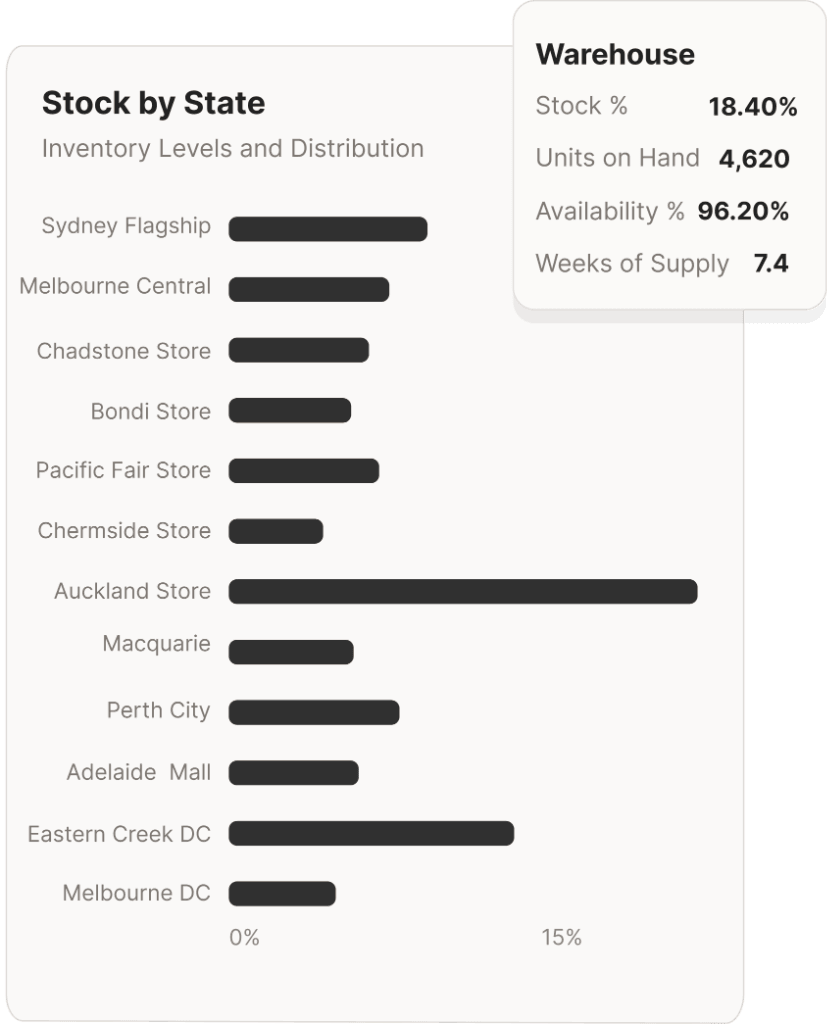
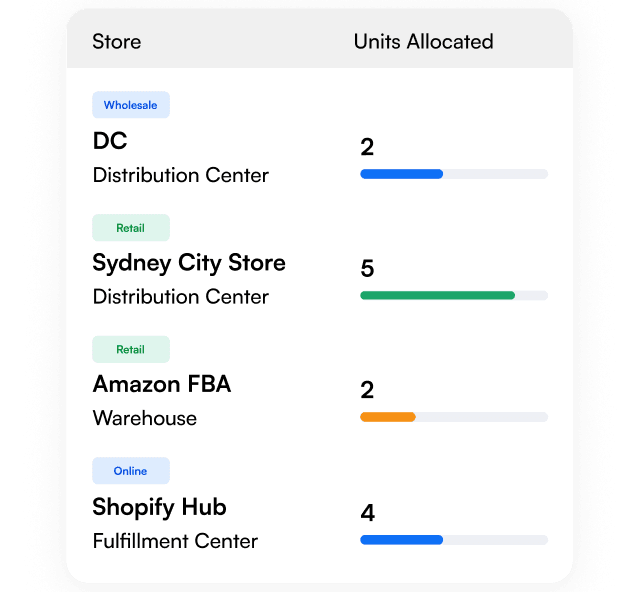
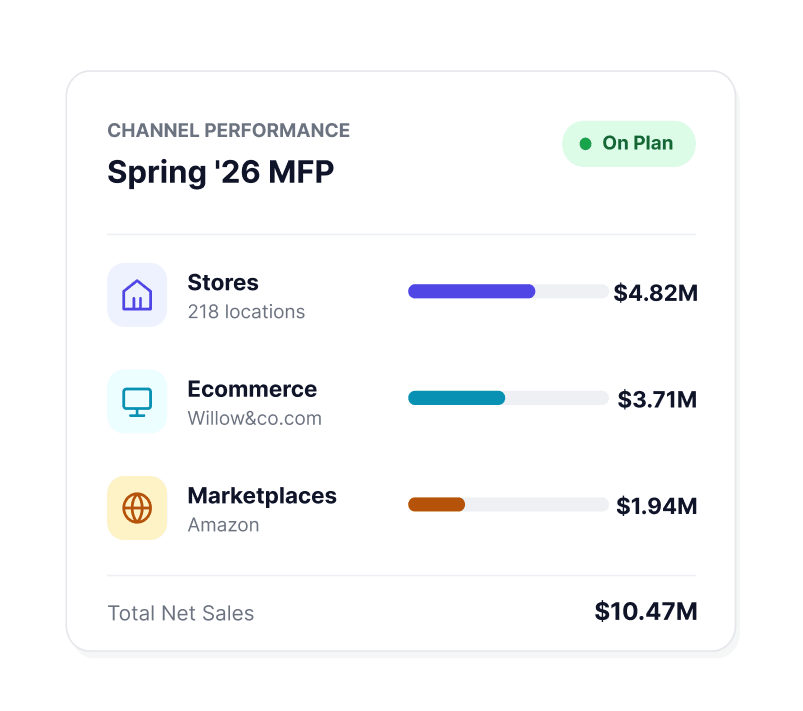
Balance stock across stores, distribution centres, marketplaces and online so every channel is stocked with purpose.
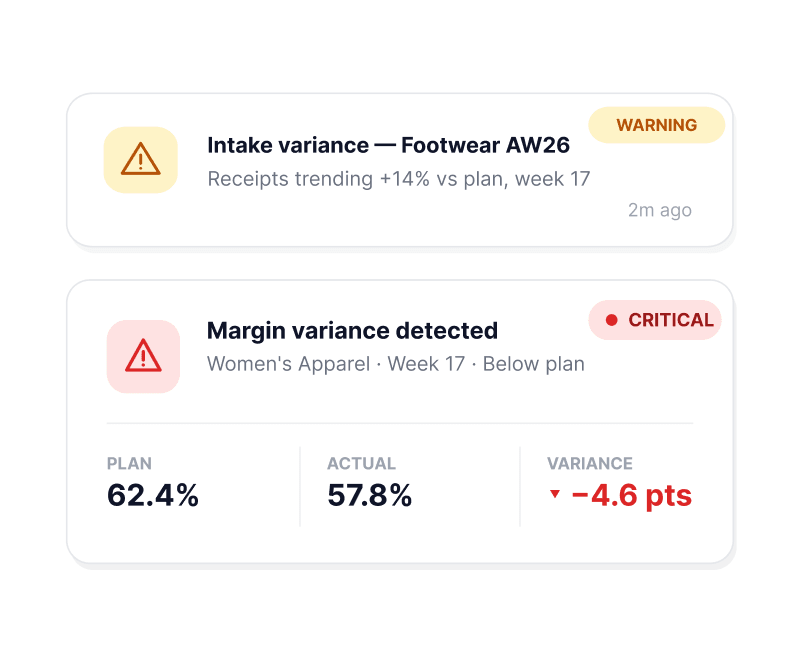
Set specific periods for replenishment around holidays, promotions and launches, so demand spikes are covered.
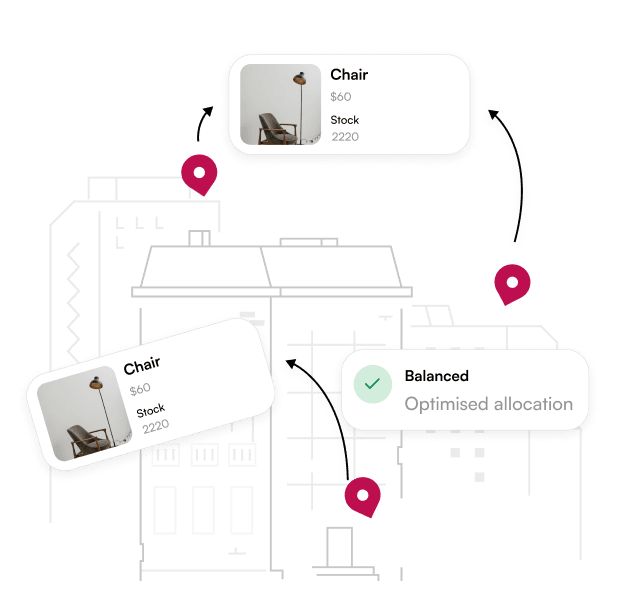
Set allocation logic by store grade, region and channel, so stock goes where it performs rather than where it fits.
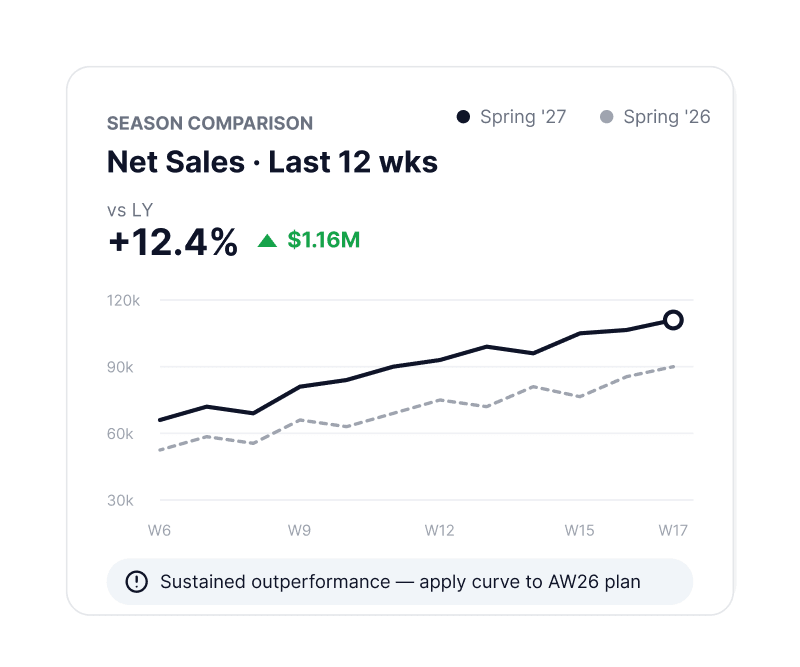
Identify slow-moving stock early and move it to a stronger location before markdown is the only option left.
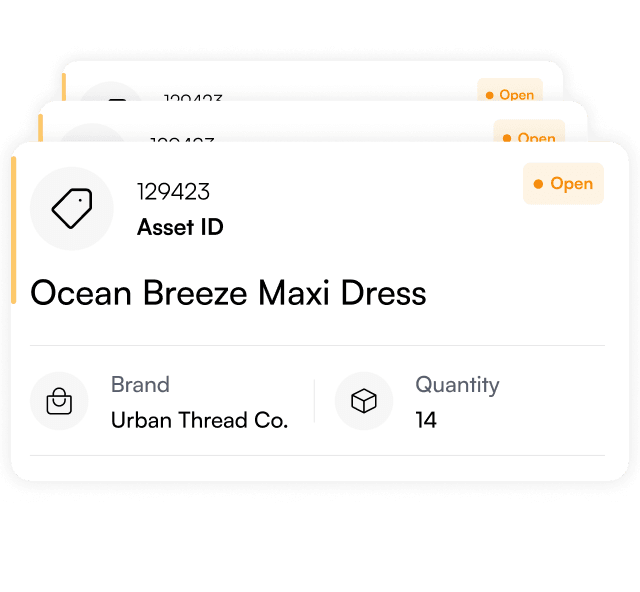
Fulfilment rate, allocated units, what has been received, what is in transit and what is still pending, on every open order. So the gap between what was bought and what has arrived is visible while there is still time to chase it.
Review shipment records, allocation rules and fulfilment status
Manual · Eastgate
Manual · Eastgate
Manual · Eastgate
Run allocation and replenishment, refills and transfers on your own data in a six-week proof of concept.
Allocate by store, cluster and size logic so stock lands where it has the best chance to sell, rather than spreading it evenly everywhere.
Cover 1.2 weeks
Low cover and rate of sale surface the refills that matter, so teams act before stores run short instead of chasing stock manually.
Spot overstock and shortage across the estate, then move stock towards the locations where demand is currently stronger.
Rebalancing early keeps stock trading at full price instead of sitting where it will not sell.
Curtis Whitfield
Retail Manager, Melbourne Australia

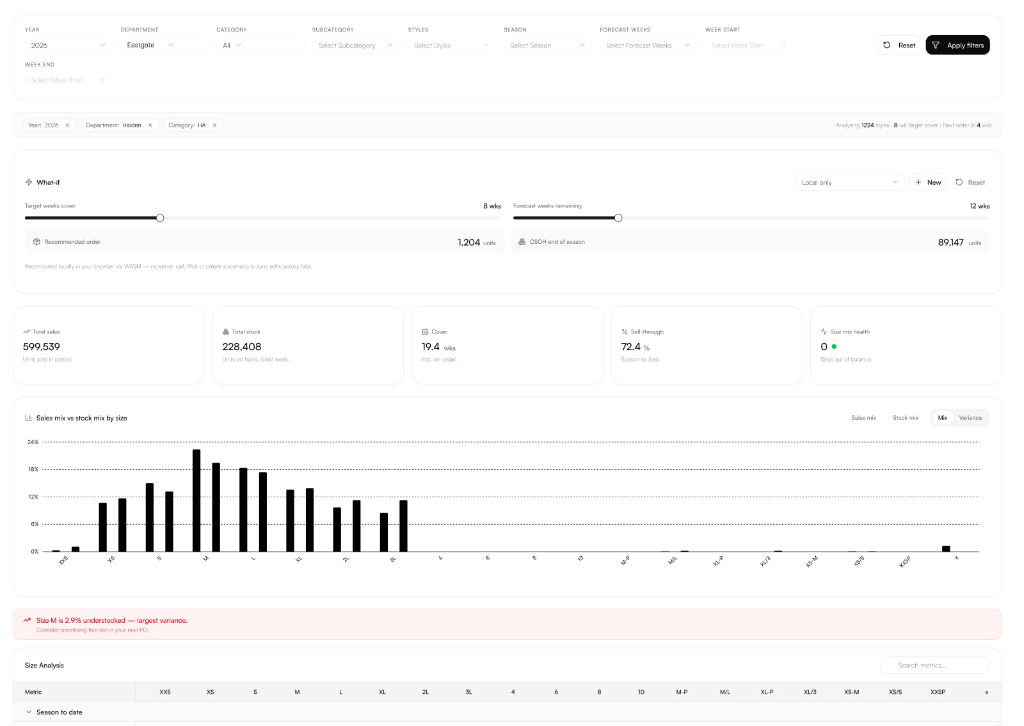
Sales mix against stock mix at size level for size curve optimization, so the sizes running short and the sizes overstocked are both visible before the next order is placed.
Cluster and grade rules set where stock can go. Replenishment models set how often it moves. Both sit under allocation, refills and transfers rather than being rebuilt each season.
FREQUENTLY ASKED QUESTIONS