HORIZON ERP
An ERP is a system of record. It holds what you own, what you owe and what you sold, and it is very good at that. It is a poor place to make decisions. Merchmix is the workspace on top, and Horizon ERP is the record underneath if you want one from us. Keep the ERP you have or take ours, either way the team stops living in it.
THE LAYER
Most retailers do not need a new ERP. They need to stop working inside the one they have. Merchmix reads from your existing system and gives planning, buying, allocation and trading a workspace built for the decision rather than the transaction. If you would rather not run two vendors, Horizon ERP is the same record layer built by us and already connected.
Merchmix connects to the ERP you already run, so the investment stays and the system of record does not move.
A retail-native ERP covering products, inventory, orders, purchasing, warehouse and finance, already wired into planning and allocation.
Buyers, planners and merchandisers work in Merchmix. The ERP does what it is good at, which is holding the truth.
Products, suppliers, stores and inventory resolve to one definition, so the plan and the ledger are describing the same thing.
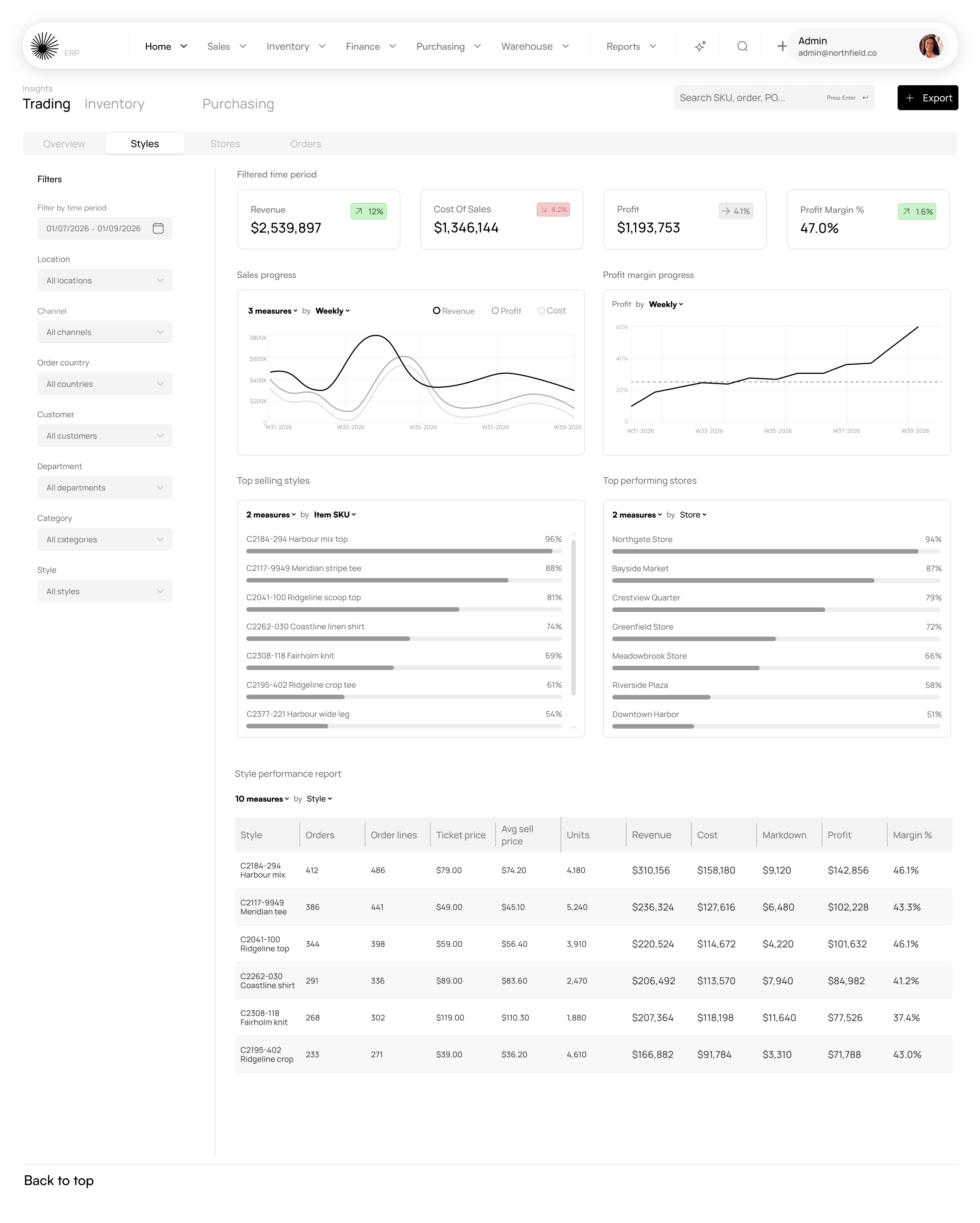
Signals from the record layer are read alongside planning data, so a stock or margin problem is surfaced where the decision gets made rather than in a report nobody opens.
Every other module reads from this layer, whether it is yours or ours.
PRODUCTS AND INVENTORY
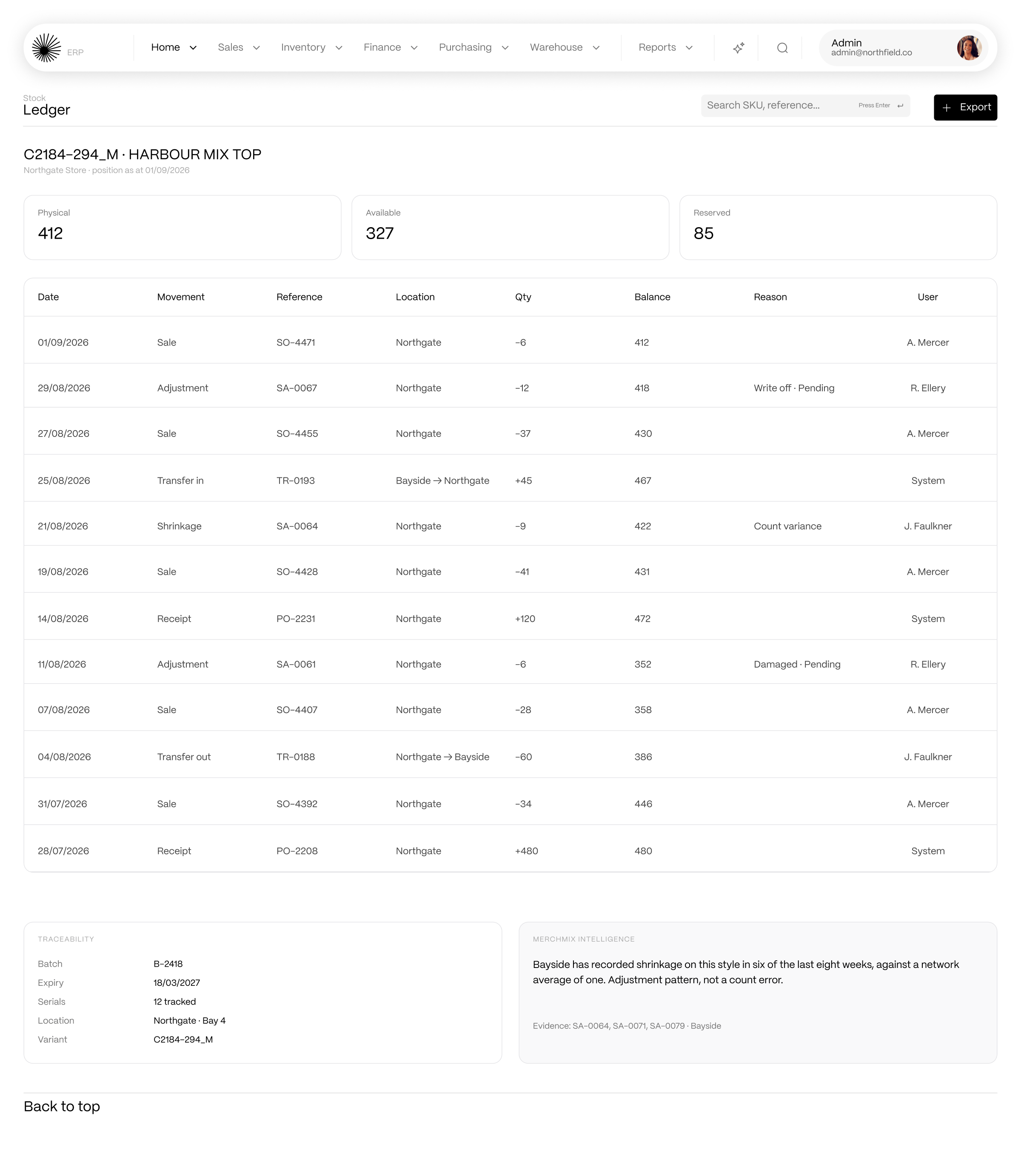
Inventory in Horizon is factual rather than predictive. No forecasts sit in here, only actuals, commitments, movements and adjustments. Every number can answer four questions: what changed, why, who did it and when. If it cannot answer those, it is not finished.
Every movement that affects inventory in chronological order, like a bank statement. Sales, receipts, transfers, adjustments, reservations and shrinkage, each with a running balance and a reference.
Physical, available and reserved are held separately, so committed stock is never counted twice.
Writes require a reason code, are fully audited and can require approval, so the ledger stays trustworthy.
Batches, expiry and serials tracked per SKU, per variant, per location.

Shrinkage and adjustment patterns are read across locations, so a store or warehouse losing stock consistently is surfaced rather than buried in the ledger.
Availability feeds allocation and replenishment, so stock is distributed against what actually exists.
ORDERS
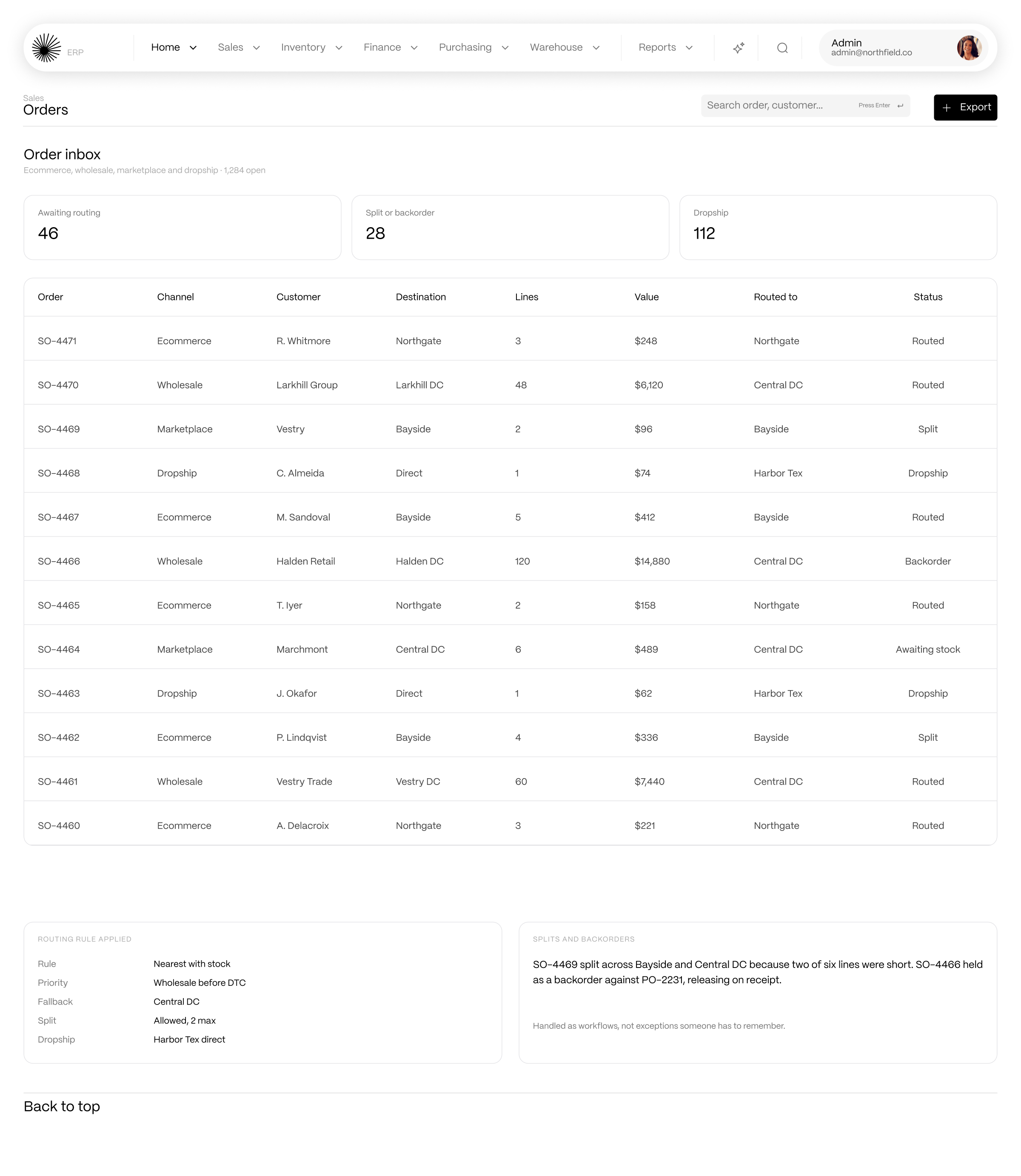
Orders arrive from ecommerce, wholesale and marketplaces, and in most businesses each channel is handled differently by a different person. Horizon takes them into one inbox and routes them on rules, so fulfilment is a system decision rather than a daily negotiation.
Ecommerce, wholesale and marketplace orders in one queue with filters, saved views and bulk actions.
Orders are directed to the right warehouse, store or supplier automatically, with priority rules for the ones that matter.
Part-shipments and out of stock lines are handled as workflows rather than exceptions someone has to remember.
Supplier-fulfilled orders run through the same pipeline, so the customer experience does not depend on who ships it.

Order demand feeds inventory reservations, so what is committed is visible to planning immediately.
PURCHASING AND SUPPLIERS
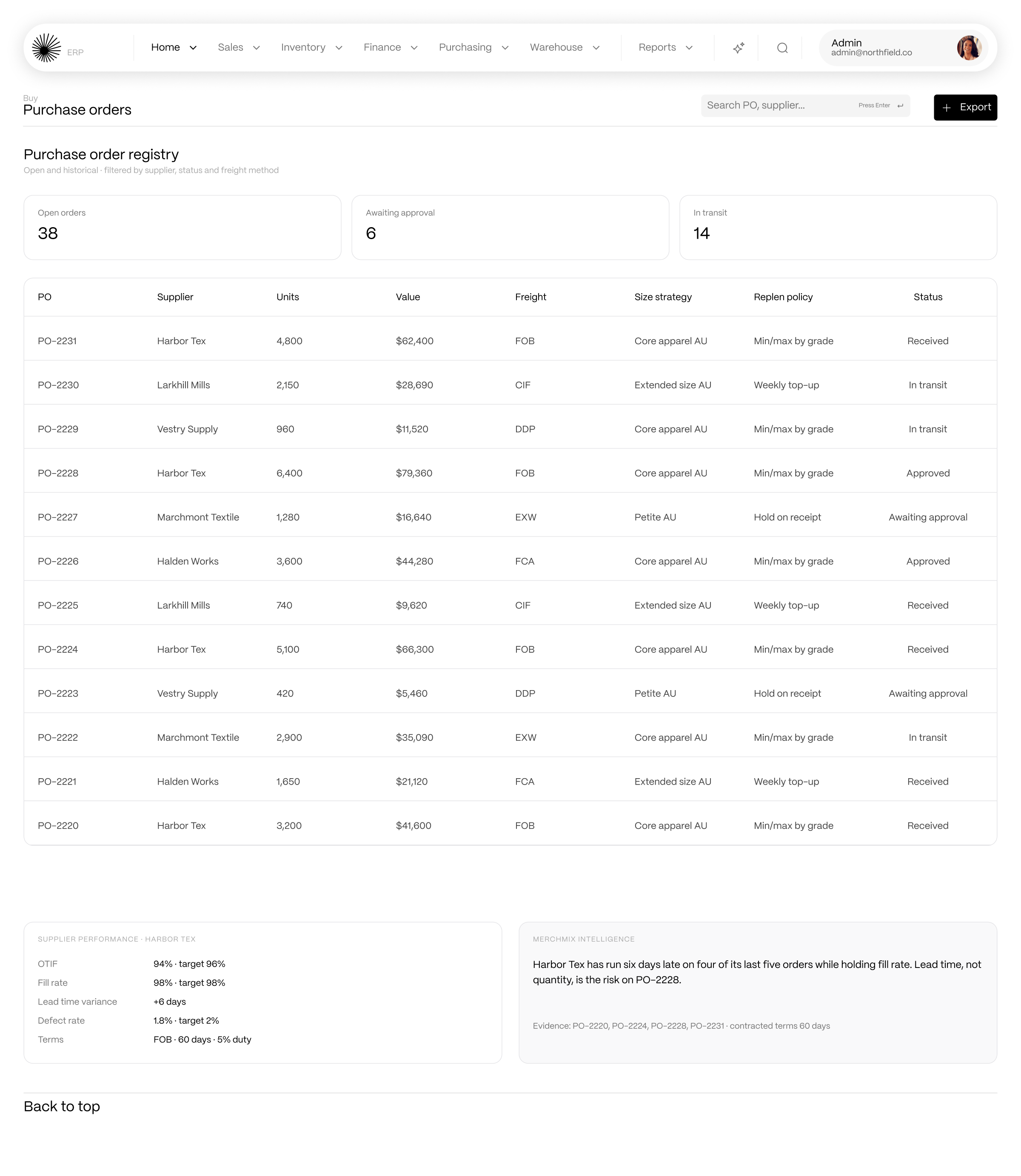
In most systems a purchase order is created, received and forgotten. Here it is a live planning object. A PO can carry a size strategy and a replenishment policy, so the buy quantity aligns with the demand logic that will distribute it, and replenishment can activate on arrival rather than waiting for someone to notice.
Every open and historical order in one view, filtered by supplier, hierarchy, allocation status, approval status and freight method.
POs carry the size strategy and replenishment policy, so size curves stay consistent from buying through to allocation.
OTIF, fill rate against target, lead time variance and defect rate per supplier, compared against contracted terms.
Agreements, payment terms and SLAs held against the vendor, so missed rebates and penalties are visible rather than lost.

Supplier performance is tracked against contracted SLAs over rolling periods, so a supplier drifting on lead time is flagged before it costs a season.
POs are raised from the range plan and land against the allocation that was planned for them.
WAREHOUSE AND FULFILMENT
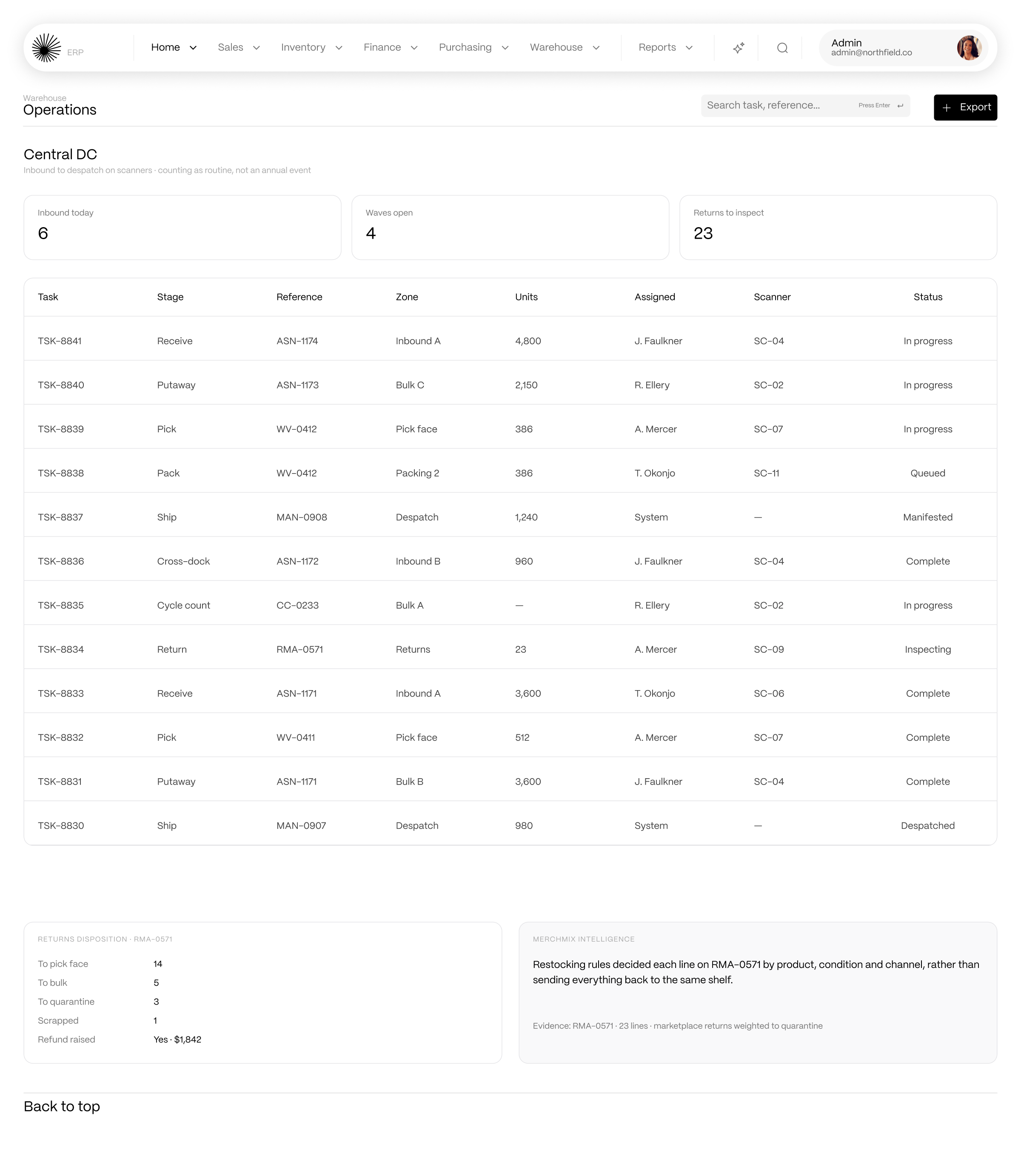
The warehouse is where inventory accuracy is won or lost. Horizon runs the full path from advance shipping notice through to despatch, on scanners rather than printouts, with counting built in rather than treated as an annual event.
ASN, receiving and putaway, so what arrives is checked against what was ordered before it enters stock.
Pick, pack, ship and wave management, with performance tracked per operation.
Cycle counts and full stocktake as routine workflows, plus cross-docking for stock that should never hit a shelf.
Carriers, rates, labels, manifests and exceptions, with RMAs, inspection, refunds and restocking rules on the way back.

Restocking rules decide whether a returned item goes back to pick face, to bulk, to quarantine or is scrapped, based on product, condition and channel rather than a person guessing.
FINANCE
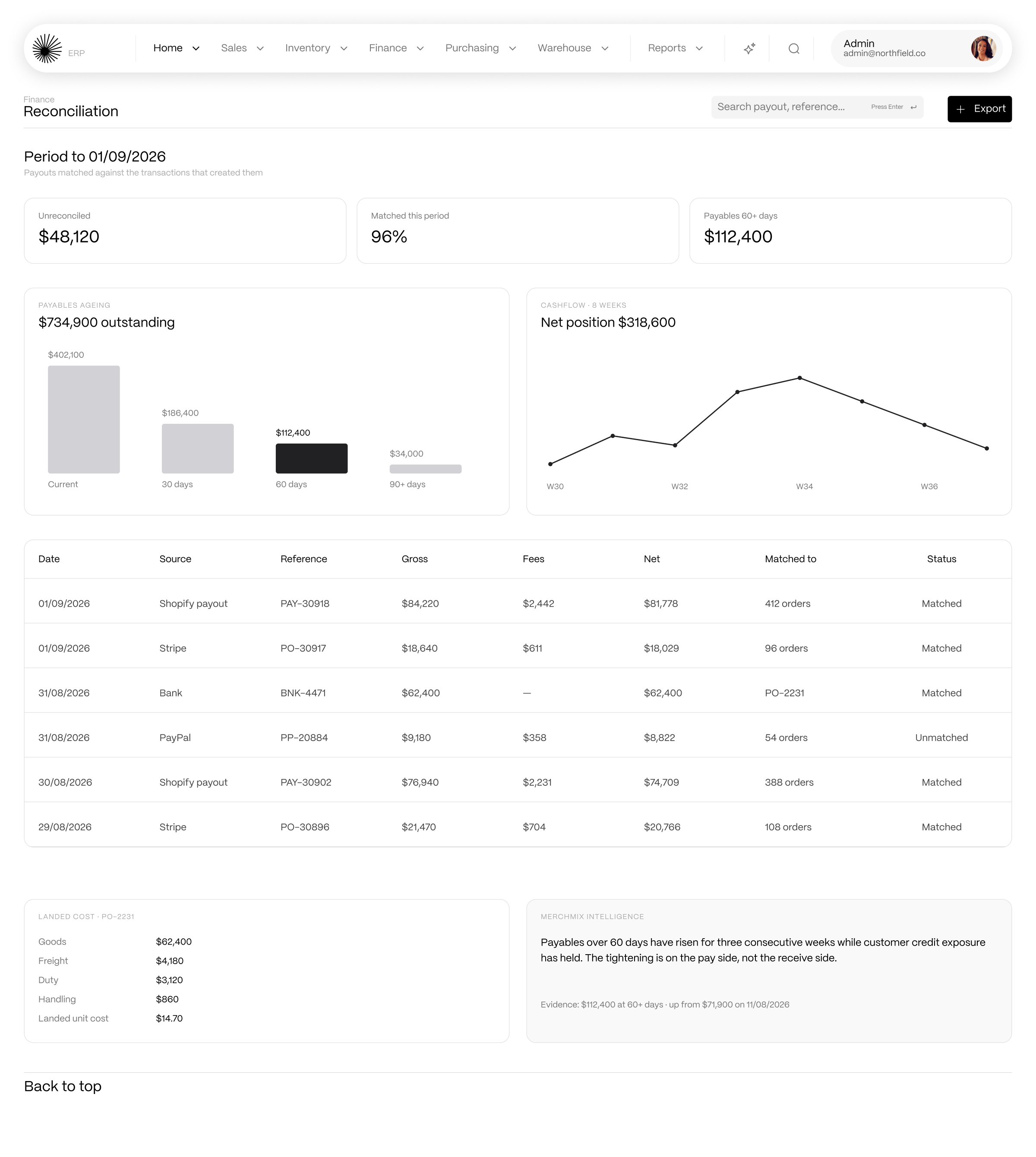
Retail finance breaks in the gap between what the operation did and what the ledger says. Horizon posts from the operation itself, so the chart of accounts, the landed cost and the reconciliation are downstream of real events rather than reconstructed afterwards.
Chart of accounts, taxes, currencies, payment methods and terms, with impact previewed before anything is saved.
Shopify payouts, Stripe, PayPal and bank, reconciled against the transactions that created them.
Freight, duty and handling allocated across shipments and posted, so margin reflects what the stock actually cost to land.
Cashflow, payables and ageing, plus credit limits and exposure per customer.

Credit exposure and payables ageing are read together, so a cash position tightening is visible before it becomes a problem rather than at month end.
Landed cost feeds the margin used in planning, so the GP in the plan is the GP in the ledger.
RUNNING THE SYSTEM
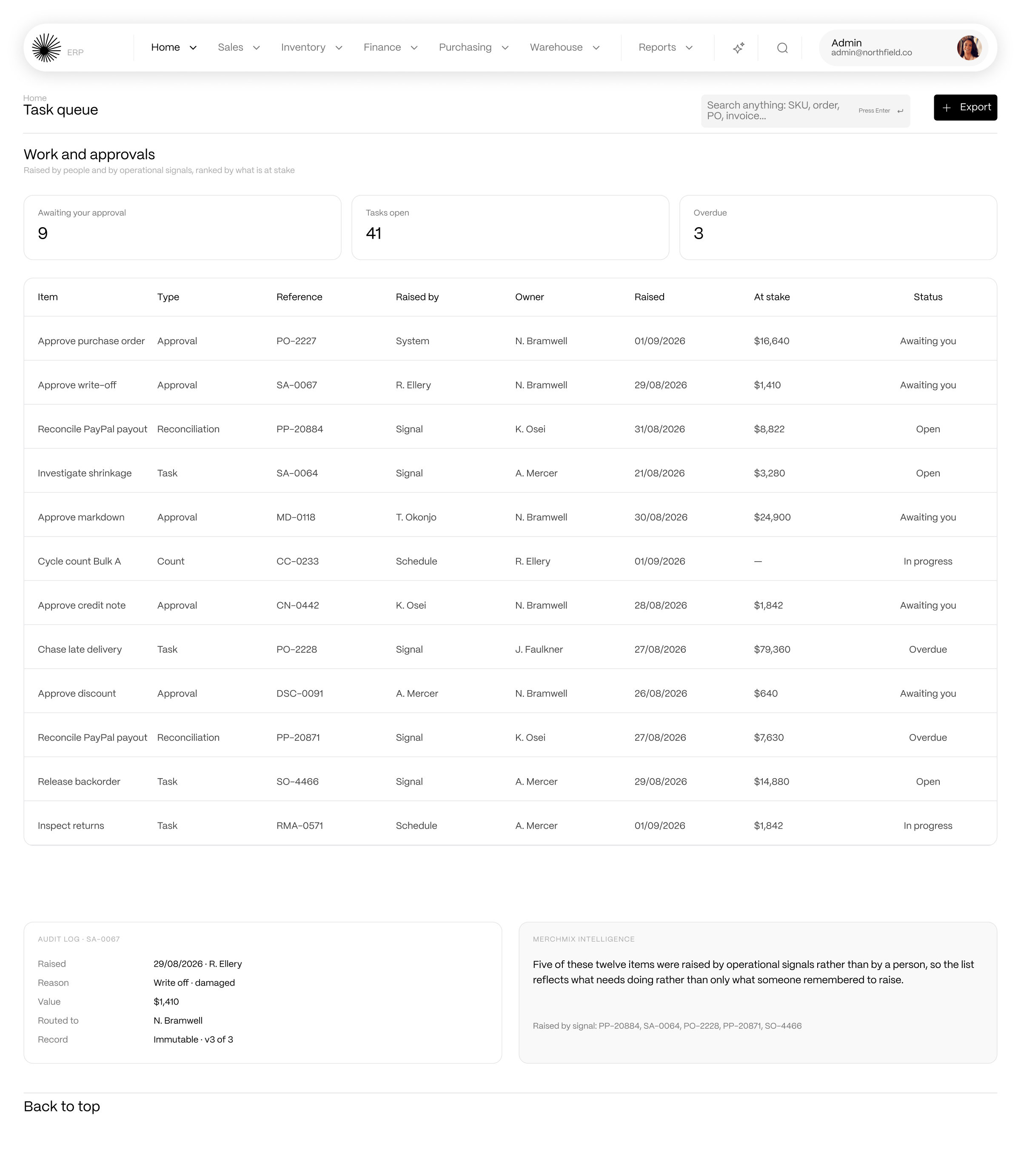
An ERP is only as usable as the layer that sits across it. Horizon carries one search across every entity, a task queue for the work, an approvals inbox for the decisions and an immutable audit log behind all of it.
SKUs, orders, customers, suppliers, purchase orders, invoices and shipments from one box.
Picks, packs, approvals, reconciliations and counts as a work list rather than an inbox full of nudges.
Purchase orders, credits, write-offs, discounts and markdown execution routed to whoever owns them.
Every action logged and immutable, with rules and schedules handling the repetitive work.

The task queue is populated from operational signals as well as manual work, so the list reflects what needs doing rather than only what someone remembered to raise.
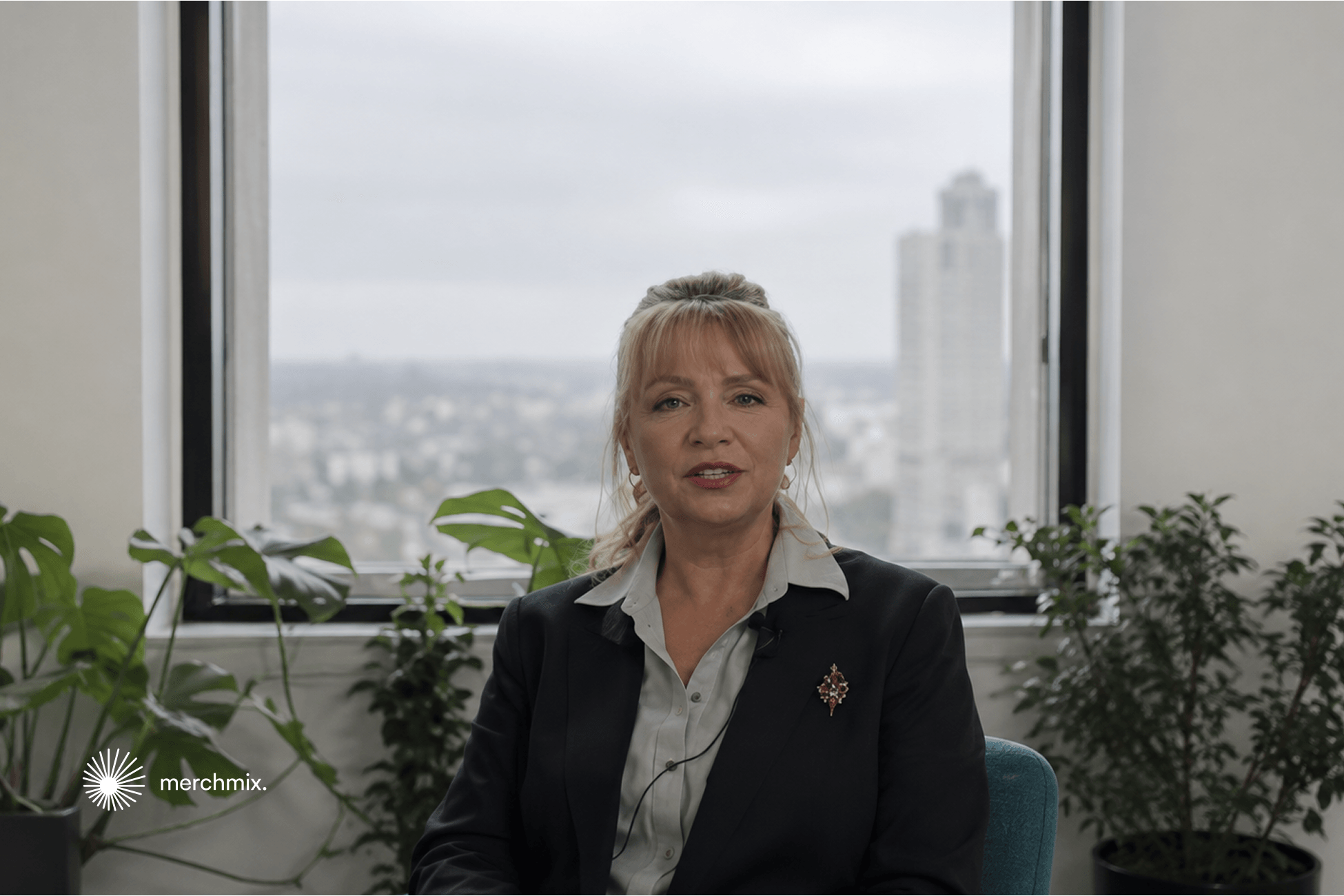
“Merchmix freed serious capital by flagging dogs early and letting us stop committing cash to pieces that would sit in the warehouse. We could cancel purchase orders on time and freed up cash flow and warehouse space.”
Michelle Taylor
Head of Valla Living

HOW IT CONNECTS
Horizon holds the truth. Everything else in Merchmix reads from it and writes back to it, so the plan and the ledger never diverge.
Actual sales and stock feed the trading position.
Availability decides what can be moved and when.
Approved buys become purchase orders with the strategy attached.
Margin and markdown are read against what landed, not what was planned.
Run a six week proof of concept on your own data, whether that means connecting the ERP you have or standing up Horizon alongside it.